With the attention and hard work of all family members, the vines on the sandy-marly soil, appropriate training and stress, always ensure a top-quality harvest, which is processed into a noble drop when ripe and healthy. The grapes are harvested by hand, which enables us to make a strict selection right from the beginning of processing. Due to the influence of the weather and other natural factors, each vintage has its own character and personality.
The Statera wine estate is located right on the national border, namely in eastern Slovenia, in the Štajerska Slovenija wine-growing region (9 ha) and in northwestern Croatia, in the Zagorje- Međimurje wine-growing region (5 ha). The vineyards are only 100 meters apart. The heart or center of the vineyard estate lies at 46° 37′ north latitude and 16° 06′ east longitude.
The vineyards are planted on steep slopes (even up to 45%), which often makes processing difficult, but because of the angle of incidence of the sun’s rays, the illumination of the clusters increases. The vineyards are planted from 250 m above sea level to 320 m above sea level. They are mainly planted in the S, E and W locations, but due to global warming, recently suitable varieties ( Sauvignon ) have also been planted in the northern locations.
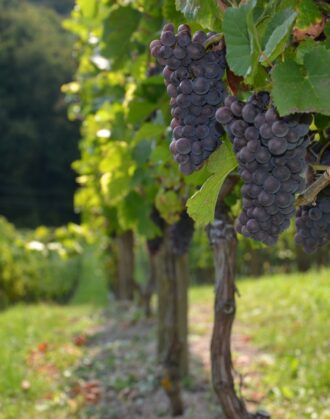
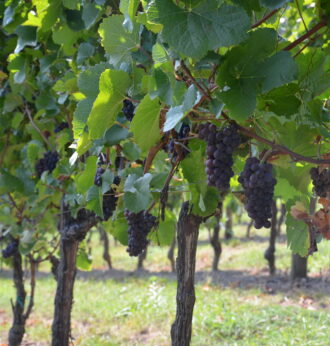
The vineyards are located in the temperate continental climate zone near the Drava River. On the slopes of the eastern Haloze, where our vineyards spread out, cold air, which flows from the pre-Alpine world (NW), and warmer air, which is brought to us from the SE by the Pannonian plain and further along the Drava field, mix throughout the seasons.
The sun, wind, and the big difference between night and day temperature have a great influence on the ripeness and aromaticity of the grapes, especially during the ripening period. The harvest takes place for a month, usually between September 10 and October 10.
Pop. annual temp.: approx. 10°C
Hours of sunshine: approx. 2700 hours/year
Pop . precipitation: approx. 1000 mm/year
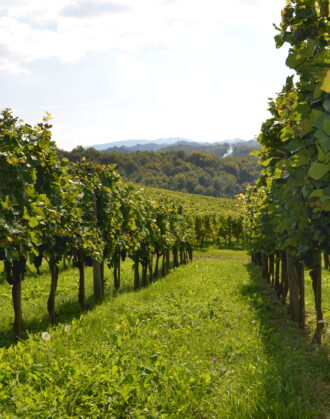
Our vineyards are mainly dominated by marl and sandstone. Most of the vineyards on the peaks and slopes grow on lighter and sandy soils, while the vineyards on more gentle slopes grow partially on clay soils. The diverse soil in our vineyards contributes to greater minerality and complexity of the wines.
The grapes are grown in a nature-friendly way, in accordance with the guidelines for integrated cultivation, which is controlled by an accredited institution. The cultivation method in all vineyards is a single guyot, which allows for adequate lighting and ventilation, as well as a quantitatively suitable and high-quality crop. In order to achieve harmonious wines, we mainly use green hand work such as weeding, removal of excess saplings, removal of leaves in the grape area, top dressing and removal of excess clusters when necessary. All vineyards are grassed because of the slopes and the resulting possibility of erosion otherwise, but due to the airiness of the soil, we still deeply loosen the soil every few years . We use the most modern vineyard machinery, which enables us to have a smaller carbon footprint, save time and take care of the environment . The load on the vine depends on the harvest, the age of the vineyard and the variety, and it ranges from 1.5 to 2.5 kg of grapes per vine.
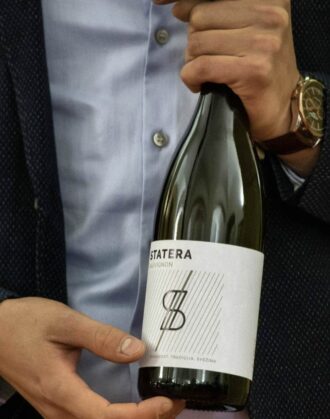
The grapes are picked by hand with special care and tenderness, mostly in the morning, when the temperature does not exceed 15 °C. Stemming and pressing with low pressures of up to 0.3 bar is done immediately due to the proximity of the vineyards and the cellar. After clarification of the must, which is achieved by cooling, the pure must is poured into stainless steel containers. Alcoholic fermentation temperatures vary between 14 and 18 °C, but this takes place slowly and under the supervision of a young oenologist for 10 to 20 days. After fermentation, the wines lie and are mixed on fine lees for 3 to 6 months which enables a greater fullness of taste and have a partial antioxidant and antimicrobial role. The wines are then stabilized, gently filtered if necessary and carefully bottled in late February and early March.